
Indigenous-specific anti-racism
In Canadian society, there is a direct line between the history and experience of colonialism and the challenges of Indigenous-specific racism within the health care system today.
– In Plain Sight: Addressing Indigenous-specific Racism and Discrimination in B.C. Health Care
Obligations and calls to action
We have both moral and legal obligations to take action to eradicate Indigenous-specific racism in healthcare. We are motivated and guided by our responsibilities under First Nations and BC law, and by the lived experiences of Indigenous people.
Our responsibilities rooted in law

In the summer of 2024, immediately following the creation of CHCPBC through amalgamation, our Board gathered with a First Nations leader, a Knowledge Keeper, witnesses, and guests for a Coast Salish blanketing ceremony. Rooted in First Nations law and protocol, the ceremony marked the formation of the new College and established reconciliation, decolonization, and anti-racism as foundations of our organization’s identity.
Our commitment to the work of eradicating Indigenous-specific racism in healthcare upholds the declarations and promises made by our legacy colleges. CHCPBC’s reconciliation actions continue to be guided by Indigenous leaders, Knowledge Keepers, and partners.
Our responsibilities rooted in lived experience
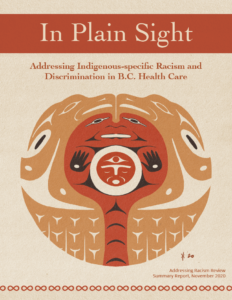
Released in late 2020, In Plain Sight documents Indigenous-specific racism in the BC healthcare system, as observed by an independent reviewer. It incorporates input from close to 9,000 patients, family members, third-party witnesses, and healthcare workers.
The report illustrates the devastating impacts of Indigenous-specific racism on health outcomes for Indigenous people in BC and highlights the urgent need for all partners in the healthcare system to dismantle systemic racism. Several of the report’s recommendations speak directly to the work that CHCPBC does and place the onus on us to take action.
The Truth and Reconciliation Commission of Canada (TRC) released 94 Calls to Action in 2015. These Calls were born from the voices of more than 6,000 Survivors of residential schools, gathered over seven years of testimony, hearings, and dialogue. The TRC’s work was to document the truth of Canada’s Indian residential school system and to chart a path towards reconciliation, rooted in justice, healing and respect. The Calls to Action are practical steps for governments, institutions, and all sectors of society to repair harm and rebuild relationships with Indigenous peoples. Among them are specific actions for healthcare (CTA #18-24): to close the gaps in health outcomes, recognize the value of Indigenous healing practices, and ensure cultural safety in every healthcare interaction.
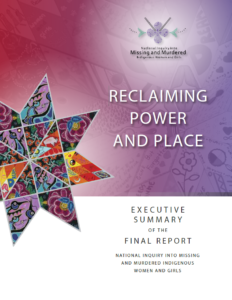
Reclaiming Power and Place summarizes the work of the National Inquiry into Missing and Murdered Indigenous Women and Girls at the time of its conclusion in 2019. Through its examination of the underlying social, economic, cultural, institutional, and historical causes of the ongoing violence toward Indigenous women, girls, and 2SLGBTQQIA people in Canada, the Inquiry revealed widespread systemic failures—including in the health system. The report situates the violence as a health issue. CHCPBC recognizes the part we must play in responding to the report’s Calls for Justice, of which there are 231.
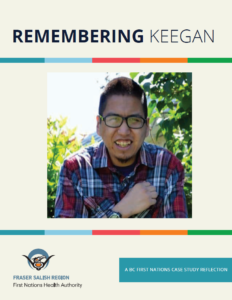
Released in 2022, Remembering Keegan details the preventable, tragic, and unnecessary death of 29-year-old Keegan Combes of Skwah First Nation in a BC hospital. It highlights the profound importance of culturally safe care and the consequences when this care is not provided.
That Keegan’s story was gifted in ceremony to the BC health system demonstrates the essential role of health profession regulators like CHCPBC in affecting change. We honour Keegan by continually working to dismantle Indigenous-specific racism and discrimination in healthcare.
Collective commitments and actions
As an organization formed through amalgamation, we remain accountable to and grounded in the commitments made by our seven legacy colleges.
The Safe Spaces project brought together governance teams from CHCPBC legacy colleges and other health profession regulators to participate in a truth and dialogue series guided by Coast Salish protocols. Participants included:
- A Coast Salish Knowledge Keeper
- 13 Indigenous women serving on health regulatory boards and committees in BC
- Registrars/CEOs and Board Chairs from nine colleges
- Team members from Qoqoq Consulting
- Four witnesses
Early dialogue centred around the question: “What do we need less of (Indigenous-specific racism) and more of (cultural humility and safety) to create safer spaces in health regulatory boards and committees?”—of particular importance as colleges had begun to increase Indigenous representation within their governance structures in response to the In Plain Sight report’s recommendations. While these efforts had been well intentioned, they’d failed to acknowledge and address the systemic racism present in these structures, creating a risk of harm to Indigenous participants.
The aim of the project was to:
- Illuminate how Indigenous-specific racism, white supremacy, and cultural unsafety operate in board and committee settings
- Hear from Indigenous board/committee members and thought leaders about actions regulators must take to ensure cultural safety and anti-racism on their boards and committees
- Develop and be accountable to a draft set of standards for addressing Indigenous-specific racism, eliminating white supremacy, and upholding cultural safety in board and committee work
The project’s final deliverable, the Playbook to Eliminate Indigenous-Specific Racism & White Supremacy in BC Health College Governance, was released in late 2023.
In 2023, nine BC health profession regulatory colleges jointly released a comprehensive progress report outlining Indigenous cultural safety, cultural humility, and anti-racism activities in the two years since signing a Statement of Apology and Commitment to Action.
The release of this Joint Apology and Commitment to Action 2021–2023 Report on September 30, 2023, coincided with and recognized Orange Shirt Day and the National Day for Truth and Reconciliation.
In the report’s summary, the legacy colleges recognized “that we are at the beginning of a lifelong journey that is personal and professional, individual and collective. […] We remain committed to this work, recognizing that we must be persistent in acknowledging and dismantling historic and ongoing Indigenous-specific racism everywhere that it exists.”
The ten BC health profession regulatory colleges that jointly launched the Indigenous Cultural Safety, Cultural Humility, and Anti-Racism Practice Standard in 2022 surveyed their licensees to explore attitudes and perceptions of Indigenous-specific racism in healthcare settings and to gather information on the implementation of the Standard. Some of the key findings included the following:
- There was a continuum of attitudes and perceptions about Indigenous-specific racism reported by non-Indigenous respondents. Some agreed or strongly agreed with statements that represent stereotyping and contribute to perpetuating unsafe care and health inequities for Indigenous people.
- There was a correlation between years of practice and these attitudes and perceptions.
- The attitudes, perceptions, perspectives, and behaviours of non-Indigenous respondents as self-reported differ from the words and behaviours observed by their Indigenous colleagues. This was consistent to various degrees throughout the results. While many non-Indigenous respondents believed their intentions and actions reflected safe and respectful care, the impact of their actions—as noted by Indigenous colleagues—was often not what they believed it to be.
- Indigenous-specific racism exists beyond public healthcare settings. Eighty percent (80%) of all respondents recognized Indigenous-specific racism as a problem in public and private healthcare settings.
- Commonly reported barriers to implementation of the new Standard were competing priorities, overwhelming workload, and being unsure of what learning opportunities were available/appropriate.
- Between 13% and 31% of respondents (varied by Core Concept) required further guidance and education to implement the Standard.

CHCPBC’s seven legacy colleges, along with four other BC health profession regulatory colleges, launched an Indigenous cultural safety, cultural humility, and anti-racism Practice Standard on September 30, 2022. The Standard set clear expectations for how licensees of these colleges (numbering more than 28,000) were to provide culturally safe and anti-racist care for Indigenous clients.
The Standard was adapted from the one developed and launched by the BC College of Nurses and Midwives and the College of Physicians and Surgeons of BC in February 2022, ensuring consistent expectations across healthcare professions for the provision of culturally safe and appropriate care to First Nations, Métis, and Inuit Peoples in BC.
The Indigenous Cultural Safety, Cultural Humility, and Anti-Racism Practice Standard is now part of CHCPBC’s harmonized Ethics and Practice Standards, launched in 2026.
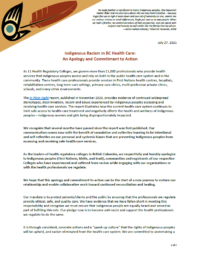
On July 27, 2021, registrars from 11 BC health profession regulatory colleges gathered with an Indigenous leader, a Knowledge Carrier, and witnesses to sign a Joint Statement of Apology and Commitment to Action in response to the In Plain Sight report.
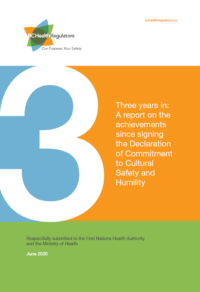
In 2020, BC Health Regulators—by then a collective of 21 health profession regulatory colleges—published Three years in: A report on the achievements since signing the Declaration of Commitment to Cultural Safety and Humility, with updates on shared learning. The report fostered accountability by revisiting the list of actions that had been proposed two years prior and indicating how many member colleges had or had not yet made progress in each area. In its reflections, the report spoke of health profession regulators and the First Nations Health Authority “work[ing] together to challenge the status quo” and described learning related to Indigenous cultural safety and humility as a “lifelong journey.”
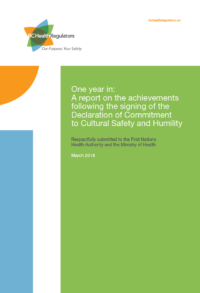
In 2018, BC Health Regulators—a collective that at the time included 23 health profession regulatory colleges—published One year in: A report on the achievements following the signing of the Declaration of Commitment to Cultural Safety and Humility, detailing actions taken related to Indigenous cultural safety and humility in the year prior. The report described “the beginnings of a cultural shift that aligns with many of the recommendations articulated by the Truth and Reconciliation Commissioner’s Report and Recommendations as well as the United Nations Declaration on the Rights of Indigenous Peoples” and laid out a list of next steps.
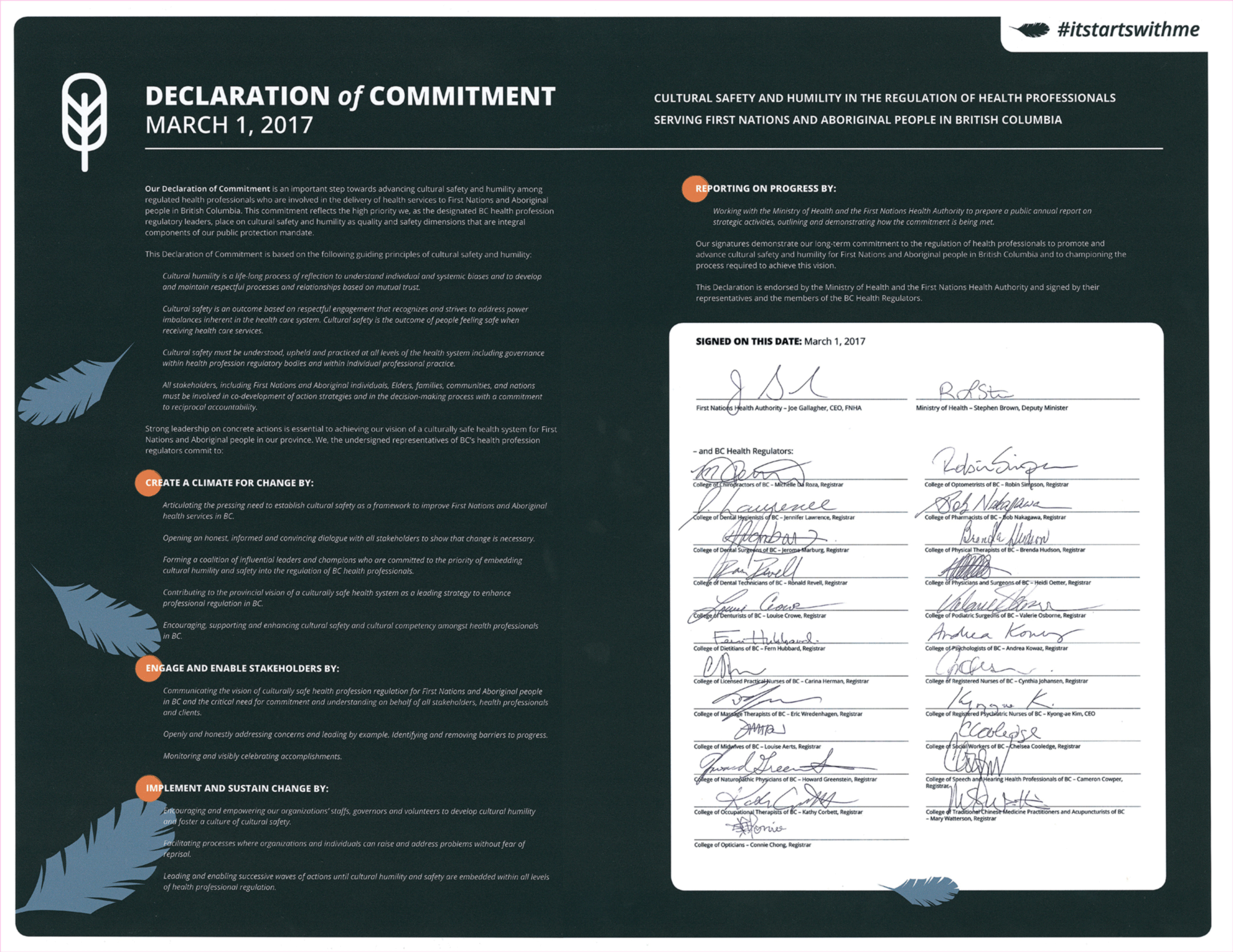
On March 1, 2017, leaders of all BC health profession regulatory colleges signed the Declaration of Commitment to Cultural Safety and Humility in the Regulation of Health Professionals Serving First Nations and Aboriginal People in British Columbia. The signing ceremony formalized our commitment to integrating cultural safety and humility into our practice as health profession regulators, in alignment with regulators’ public interest mandates.
Signing the Declaration reflected the high priority placed on advancing cultural safety and humility for Indigenous people among regulated health professionals by committing to actions and processes that will ultimately embed culturally safe practices within all levels of health professional regulation. The signing of the Declaration was witnessed by over 230 delegates attending the 2017 Quality Forum “Best of Both Worlds” conference—a forum focused on improving the quality of healthcare for Indigenous people. The Declaration was endorsed by the First Nations Health Authority and the Ministry of Health and was signed by their representatives and the members of the BC Health Regulators.
Our journey toward reconciliation
Blurbs to go here, including another mention of the blanketing ceremony, strat plan, TRC ten-year report, development of PQPP, and anything else we deem relevant